
Negotiated rates are public. So why are out-of-network claims still priced like it’s 2010? Four years into the Transparency in Coverage era, negotiated rates for every commercial payer in the country are published, machine-readable, and refreshed monthly. Yet most out-of-network claims are still priced the way they were before any of that data existed: legacy fee schedules, Medicare multiples, or manual review.
That gap was the subject of a joint webinar last week between Mark Galvin, CEO, TALON and April Gill, Chief Commercial Officer, Smart Data Solutions. The conclusion, in one line: transparency becomes valuable when it’s operationalized in the claims workflow.
Legacy repricing is defending, not pricing
When we polled the audience of TPA and health plan leaders on how they most often price an out-of-network claim, the answers clustered around three legacy methods:
- Reference-based pricing, 45 percent. The most common answer by a wide margin.
- Legacy fee schedules, 27 percent. Built before published rate data existed.
- Usual-and-customary estimates, 18 percent. An estimate standing in for a price.
Every one of those methods shares a flaw: the number gets produced first and defended later. The member is exposed to an unexpected balance, the provider disputes the payment, and the cost compounds after adjudication through rework and appeals. Legacy repricing isn’t really pricing. It’s defending a number after the fact.
The Medicare-multiple approach made sense when commercial prices were, as hospitals once argued in court, unknowable. That defense has aged out. As Galvin put it during the session, with four years of published payer files and hospital price transparency data now public, “it’s important to move away from artificial prices and move towards market-driven prices that are fair to both sides of the equation.”
Legacy repricing produces a number first and defends it later. The market already published a better one.
A price that defends itself
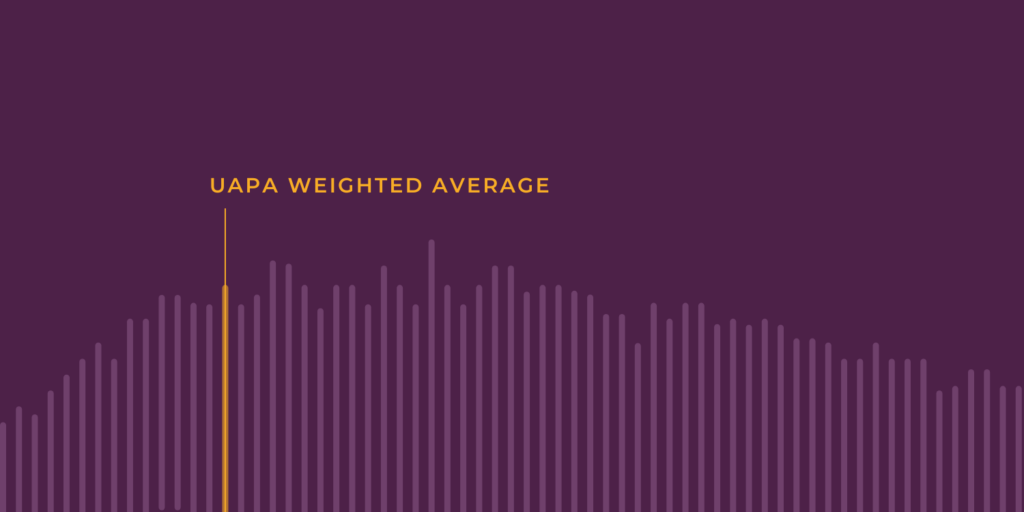
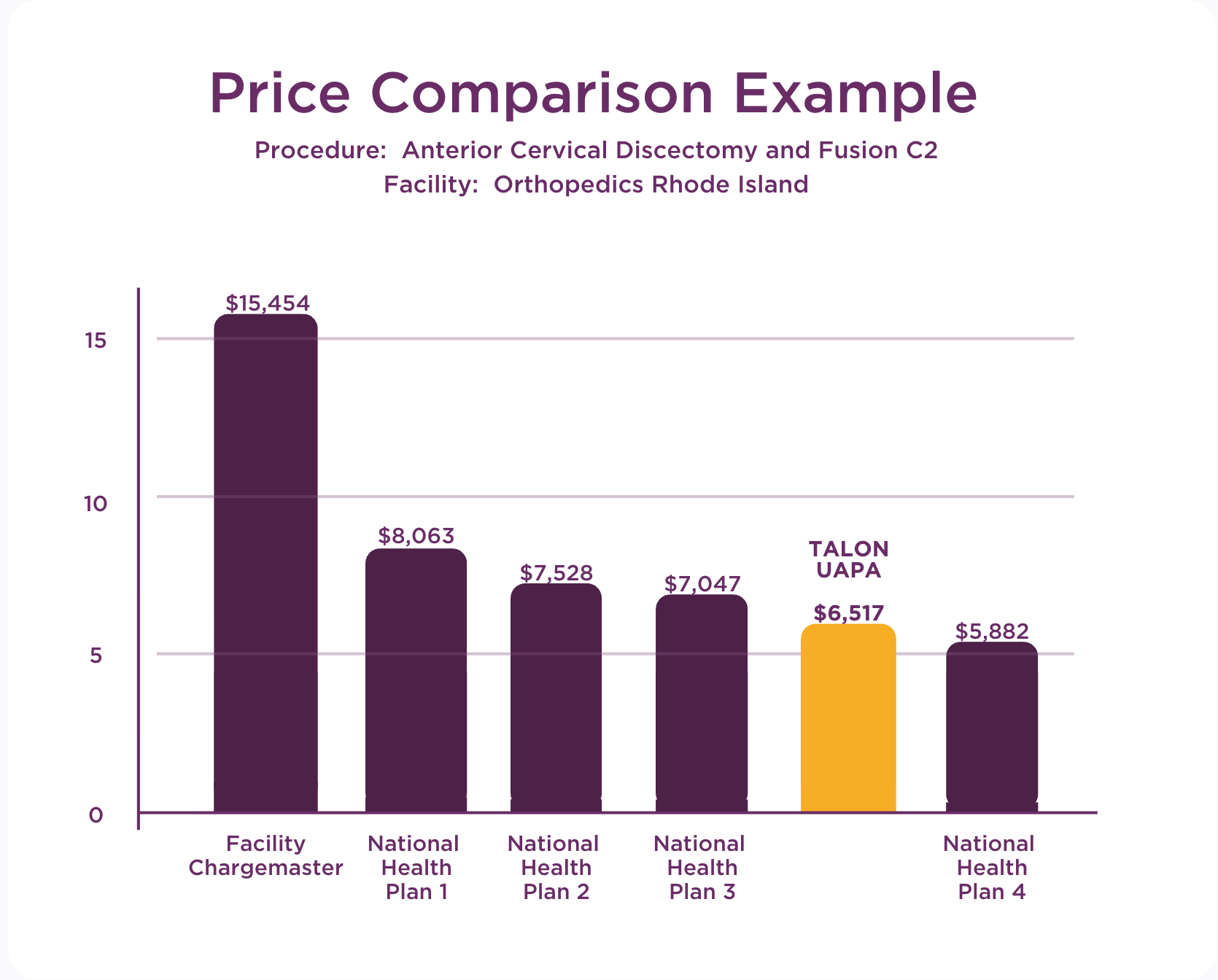
The alternative starts with a different number. TALON’s UAPA™ (Universally Acceptable Payment Amount, patent pending) is calculated for each individual provider and each individual procedure as the weighted average in-network commercial rate that provider actually received over the past year.
That construction matters. It isn’t a discount off billed charges, which are an opening ask rather than a real price. It isn’t a public-program benchmark imported into a commercial market. It’s what the commercial market already pays that specific provider for that specific service, derived from 99.9% coverage of published machine-readable files and validated against more than 25 billion claim records.
“It becomes a very defensible price for both sides of the equation. If you want to go to that provider, that’s what they’re expecting to get, and you should expect to pay that amount.”
Mark Galvin, CEO, TALON
A defensible number also changes the economics of dispute. Instead of arguing about a methodology claim by claim, you reference the market, procedure by procedure, applied the same way every time.
Where the price has to live
A defensible rate applied after adjudication still arrives too late. The claim has already moved; the damage is already downstream.
That’s why the TALON and Smart Data Solutions partnership applies UAPA™ in-stream, inside the clearinghouse, where the claim is still just information.
“We take a shift-left approach. We’re trying to ensure that the information is available before the adjudication happens, so that you’re not creating downstream problems for something that could easily be solved upstream.”
April Gill, Chief Commercial Officer, Smart Data Solutions
Because the integration rides on existing clearinghouse connectivity, adoption is a configuration rather than a rebuild. “It’s pretty low lift,” Gill noted. “It’s a configuration for us.” The Universal Repricer supports real-time or batch processing, API or SFTP, and leverages integrations with 16+ claims administration platforms.
The quiet compliance angle
There’s a second reason the repricing model is due for scrutiny. Much of today’s out-of-network repricing is compensated as a percentage of “savings” measured against billed charges. That structure pays the repricing vendor more as the gap between a fictional number and the final payment grows, and under CAA 2021 fiduciary obligations, plan sponsors are increasingly expected to understand exactly who earns what from their claims flow.
A flat, disclosed PEPM fee with a market-derived rate removes that question entirely. For administrators, getting ahead of it is both a fiduciary safeguard and a client conversation worth owning before someone else starts it.
The bottom line
The rates are already public. Four years of payer files and hospital price transparency data have made the commercial market legible in a way it has never been. What has not caught up is where that data gets applied. A defensible rate produced after adjudication is a rate produced too late, and a rate derived from billed charges is a rate derived from a number nobody actually pays. Applying a market-derived price in-stream, before the claim moves, is what turns four years of disclosure into an outcome. The only question is whether those published rates are pricing your claims.
Watch the full webinar recording, read the TALON and Smart Data Solutions partnership announcement, and talk to either team about what UAPA™ and the Universal Repricer could look like in your claims workflow.
Watch the webinar and see UAPA™ applied in-stream
Because the integration rides on existing clearinghouse connectivity, adoption is a configuration rather than a rebuild.
TALON is a healthcare technology company focused on restoring market function in healthcare by making price transparency actionable. Founded in 2014 and headquartered in Portsmouth, NH, TALON’s platform turns disclosed rates into decision-ready price signals, paired with a patented incentive engine that drives real behavior change and measurable cost reduction. UAPA™ (Universally Acceptable Payment Amount) is patent pending. Making Healthcare Make Sense.